

Water-Blocking Airbags for Pipeline Sealing: Applications, Benefits and Selection Guide
Water-blocking airbags for pipeline sealing are reusable inflatable devices designed to temporarily block water, wastewater, sewage, or other non-pressurized and low-to-moderate pressure flows inside pipelines. They are widely used in municipal drainage systems, sewer networks, water conservancy projects, pipeline maintenance, closed-water testing, emergency repair, and temporary flow isolation.
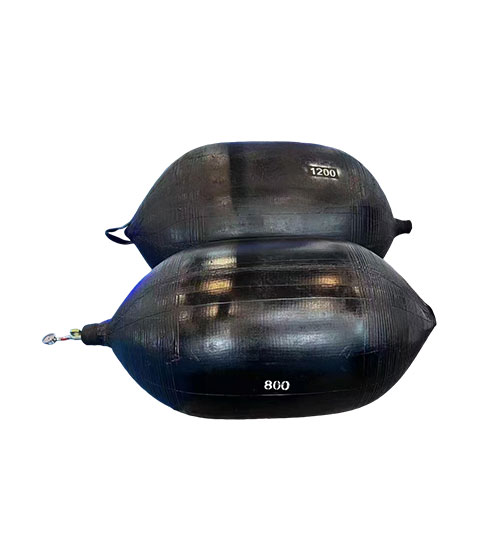
A water-blocking airbag is typically manufactured from reinforced rubber or rubber-fabric composite materials. Before use, the deflated pipeline sealing airbag is inserted into the pipe and positioned at the required location. It is then inflated to the specified pressure until the rubber body expands and seals against the inner wall of the pipeline.
Once fully inflated, the water-blocking airbag creates a temporary barrier that can help isolate a section of pipe for inspection, repair, leak testing, maintenance, or construction work.
Compared with rigid mechanical plugs, inflatable pipeline sealing airbags are lightweight, flexible, easy to transport, and adaptable to different pipe diameters. Because they can be deflated after use, they are also easier to remove from pipelines and can be reused when properly maintained.
However, selecting the correct water-blocking airbag requires more than matching the nominal pipe diameter. Buyers and contractors should consider pipe size, internal pressure, water head, pipeline material, pipe condition, insertion access, inflation pressure, sealing length, restraint requirements, rubber material, and expected reuse frequency.
This guide explains the applications, benefits, working principle, materials, sizing requirements, installation procedure, safety considerations, maintenance, and selection criteria for water-blocking airbags used in pipeline sealing.
Water-blocking airbags for pipeline sealing are inflatable rubber devices used to create a temporary seal inside a pipeline.
They are also commonly referred to as:
Pipeline plugging airbags
Inflatable pipe plugs
Water-stop airbags
Pipe sealing airbags
Water-tightness testing airbags
A typical water-blocking airbag consists of:
Airtight inner rubber layer
Reinforcement fabric
Outer wear-resistant rubber layer
Inflation valve
Connection or pulling fittings
The reinforcement layer helps the water-blocking airbag maintain controlled expansion and resist internal pressure.
The outer layer provides resistance to:
Abrasion
Pipe wall contact
Moisture
Aging
Repeated installation
When inflated correctly, the pipeline sealing airbag presses firmly against the internal wall of the pipe and creates a temporary seal.
The working principle of a water-blocking airbag is based on controlled inflation.
The airbag is inserted into the pipeline while deflated.
Once positioned, compressed air is introduced through the inflation valve.
As pressure increases, the rubber body expands outward.
The expanded airbag contacts the pipe wall and develops friction and sealing pressure.
The basic process is:
Inspect the pipeline.
Select the correct airbag size.
Inspect the airbag.
Insert the deflated airbag.
Position it in a suitable pipe section.
Secure the airbag against movement.
Inflate gradually.
Confirm the specified working pressure.
Perform sealing, testing, or maintenance.
Release upstream pressure when work is complete.
Deflate gradually.
Remove and clean the airbag.
The performance of a water-blocking airbag depends on correct sizing, inflation pressure, pipeline condition, and restraint.
Pipeline sealing is required in many construction and maintenance operations.
Workers may need to temporarily isolate a pipe section so they can:
Repair damaged pipe
Inspect joints
Test leakage
Perform closed-water testing
Replace valves
Clean a pipeline
Conduct sewer maintenance
Install new connections
Prevent water from entering a work zone
A water-blocking airbag provides a temporary isolation method without permanently modifying the pipeline.
Water-blocking airbags can be used in a wide range of pipeline and civil engineering projects.
One of the most common applications is municipal sewer pipeline maintenance.
A pipeline sealing airbag can isolate wastewater flow while workers inspect or repair a section of sewer.
Typical uses include:
Sewer rehabilitation
Pipe joint repair
Manhole maintenance
CCTV inspection preparation
Temporary flow isolation
Stormwater pipelines may need temporary sealing during construction, maintenance, or testing.
Inflatable pipe plugs can help block water entering a work zone.
Water-blocking airbags are widely used during pipeline water-tightness testing.
The airbag temporarily seals one end or section of the pipe.
Water can then be introduced into the isolated section to evaluate leakage.
Pipeline sealing airbags can be used to isolate channels or pipes in wastewater treatment facilities during:
Maintenance
Cleaning
Equipment replacement
Inspection
Water-blocking airbags may be used in:
Drainage pipelines
Irrigation systems
Temporary water isolation
Hydraulic maintenance
When a pipeline section must be repaired, inflatable airbags can temporarily stop or reduce flow.
This can create a safer and drier maintenance area.
Larger water-blocking airbags may also be used for temporary sealing in culverts or underground drainage structures.
In certain emergency situations, pipeline sealing airbags can provide temporary flow control until permanent repairs are completed.
Water-blocking airbags for pipeline sealing offer several practical advantages.
The airbag is inserted while deflated.
This makes it easier to pass through:
Manholes
Access openings
Restricted spaces
Compared with many rigid mechanical plugs, inflatable pipeline airbags are relatively lightweight.
This simplifies:
Transportation
Carrying
Installation
Removal
A properly used and maintained water-blocking airbag can be reused across multiple pipeline projects.
The actual reuse life depends on:
Material quality
Pipe condition
Inflation pressure
Handling
Cleaning
Storage
Water-blocking airbags can be manufactured for different pipe diameters.
Some models may cover a diameter range, while others are designed for a specific pipe size.
After work is complete, the airbag can be deflated.
The reduced size makes removal easier.
The pipeline does not need permanent mechanical modification for temporary isolation.
Depending on design and application, pipeline sealing airbags may be used in pipes made from:
Concrete
Steel
PVC
HDPE
Clay
Other common pipeline materials
The pipe wall condition should always be checked before use.
Materials Used in Pipeline Sealing Airbags
Material selection directly affects performance.
Water-blocking airbags are generally made from reinforced rubber composites.
The inner layer maintains air pressure.
Air retention is critical because pressure loss can reduce sealing force.
Reinforcement fabric limits uncontrolled expansion and improves pressure resistance.
It helps the pipeline sealing airbag maintain:
Diameter
Length
Shape
Stability
The external rubber layer protects against:
Pipe abrasion
Moisture
Rough surfaces
Handling damage
Depending on the application, the rubber compound may also require resistance to aging and certain chemicals.
How to Choose the Correct Water-Blocking Airbag
Choosing the correct pipeline sealing airbag requires evaluating several technical factors.
Pipe diameter is the first selection parameter.
Buyers should confirm the actual internal diameter, not only the nominal pipe specification.
Deposits, liners, deformation, or aging may change the usable internal diameter.
The airbag should have a suitable inflation range for the actual pipe.
Different pipeline materials have different internal surfaces.
Examples include:
Concrete
Steel
PVC
HDPE
Clay
A smooth plastic pipe may provide different friction characteristics from a rough concrete pipe.
The pipeline material should therefore be provided when selecting a water-blocking airbag.
Before installation, inspect the pipe for:
Sharp edges
Broken concrete
Exposed reinforcement
Debris
Serious corrosion
Large cracks
A damaged pipe surface can puncture the airbag.
The sealing area should be as smooth and clean as practical.
The airbag must resist the expected upstream water or wastewater pressure.
This is one of the most important selection factors.
Do not select a pipeline sealing airbag based only on diameter.
The allowable back pressure must also be verified.
For gravity pipelines, pressure may be related to upstream water head.
A higher water level produces greater pressure against the airbag.
The expected maximum water head should be known before installation.
Inflation pressure creates the sealing force against the pipe wall.
If the airbag is underinflated:
Sealing may be inadequate.
The airbag may slip.
Leakage may occur.
If overinflated:
The airbag may be damaged.
The pipe may be stressed unnecessarily.
Always use the specified inflation pressure for the selected pipeline sealing airbag.
Longer contact length can improve friction and sealing stability in some applications.
The required length depends on:
Pipe diameter
Airbag design
Pressure
Available installation space
A water-blocking airbag can be pushed along the pipe by upstream pressure.
This creates a significant safety risk.
The airbag should therefore be restrained according to the application and operating procedure.
Never rely only on friction if additional restraint is required.
Determine:
Manhole size
Pipe access diameter
Distance to sealing location
Available working space
A large airbag may fit the pipe but be difficult to insert through a small access opening.
Wastewater and industrial pipelines may contain chemicals or contaminants.
The rubber material should be compatible with the expected environment.
For frequent municipal or contractor use, prioritize:
Strong reinforcement
Abrasion resistance
Valve durability
Easy repair
Easy cleaning
Pipeline Diameter Range
Some water-blocking airbags are designed for a single pipe diameter.
Others may cover a range.
Buyers should verify:
Minimum usable pipe diameter
Maximum usable pipe diameter
Inflation pressure for each size
Maximum back pressure
A larger diameter range does not automatically mean better performance.
The airbag must still provide safe sealing at the actual pipe size.
Inflation Pressure vs Pipeline Pressure
These are two different values.
Inflation pressure is the air pressure inside the sealing airbag.
It expands the rubber against the pipe wall.
Back pressure is the external water or wastewater pressure acting against the airbag.
A pipeline sealing airbag must maintain sufficient friction and structural stability to resist this force.
Both values should be checked.
Never assume that a high inflation pressure automatically means the airbag can withstand any upstream pressure.
Why Restraint Is Important
When water pressure acts against a pipeline plug, it creates an axial force.
If the sealing airbag loses friction or moves, it can be expelled from the pipe.
This can create serious hazards.
Suitable restraint may include:
Mechanical bracing
Safety cables
Structural supports
Approved anchoring systems
The restraint system should be appropriate for the actual pipe pressure and worksite conditions.
How to Install a Water-Blocking Airbag
Correct installation is essential for safe and reliable pipeline sealing.
Check:
Pipe diameter
Pipe wall
Water level
Access point
Sealing location
Remove:
Stones
Metal debris
Sharp objects
Excessive sediment
The contact area should be clean enough to avoid puncture and improve sealing.
Check for:
Cuts
Abrasion
Cracks
Valve damage
Seam damage
Previous repair defects
Before insertion, inflate the airbag enough to check for obvious leakage.
Move the deflated water-blocking airbag into the pipeline.
Avoid dragging it across sharp surfaces.
Whenever possible, select a straight, structurally sound pipe section.
Avoid positioning directly over:
Large joints
Broken pipe areas
Sharp protrusions
Secure the pipeline sealing airbag before full inflation.
Increase pressure slowly.
Monitor:
Airbag position
Pipe contact
Pressure
Restraint
Use a suitable pressure gauge.
Do not exceed the recommended inflation pressure.
Where practical, upstream pressure should be applied gradually rather than suddenly.
Monitor the airbag for movement.
Using Water-Blocking Airbags for Closed-Water Testing
Closed-water testing is a common application.
The general process may involve:
Isolate the test section.
Install pipeline sealing airbags.
Inflate to the required pressure.
Confirm stable sealing.
Fill the test section with water.
Establish the required test water level.
Monitor leakage according to the project procedure.
Release water pressure.
Deflate the airbags.
Remove them safely.
The airbag must be suitable for the expected test pressure.
Preventing Airbag Slippage
Slippage can occur because of:
Excessive upstream pressure
Insufficient inflation
Smooth pipe walls
Contamination
Poor restraint
To reduce slippage:
Select the correct size.
Use the specified inflation pressure.
Clean the contact area.
Use adequate restraint.
Do not exceed rated back pressure.
Preventing Air Leakage
Air leakage can reduce sealing pressure.
Common causes include:
Valve damage
Punctures
Abrasion
Aging
Seam defects
Before use:
Inspect the airbag.
Test pressure retention.
Check the valve.
Pressure should also be monitored during longer operations.
Common Pipeline Sealing Problems
Possible causes include:
Incorrect size
Low inflation pressure
Irregular pipe surface
Debris
Damaged rubber
Possible causes include:
Excessive back pressure
Poor restraint
Low friction
Insufficient inflation
Possible causes include:
Sharp debris
Broken concrete
Exposed steel
Possible causes include:
Valve leakage
Surface damage
Seam failure
Possible causes include:
Incomplete deflation
Sediment accumulation
Restricted access
How to Deflate and Remove a Pipeline Sealing Airbag
Before deflation, upstream water pressure must be safely relieved.
Do not deflate the airbag while significant pressure remains trapped behind it.
Once pressure is controlled:
Confirm the work area is safe.
Release internal air pressure gradually.
Allow the airbag to fully contract.
Release restraint as appropriate.
Pull the airbag out carefully.
Avoid dragging it across sharp pipe surfaces.
Cleaning After Use
After removal, wash the water-blocking airbag thoroughly.
Remove:
Sediment
Sewage residue
Chemicals
Oil
Dirt
After cleaning:
Dry the surface.
Inspect for abrasion.
Check the valve.
Inspect seams.
Check for leaks.
Maintenance Tips
Good maintenance increases reusable service life.
Important maintenance practices include:
Inspect before every use.
Inspect after every use.
Repair minor damage promptly.
Keep valves clean.
Avoid overinflation.
Keep the airbag away from sharp objects.
Store correctly.
Storage Requirements
Store pipeline sealing airbags in a:
Dry
Clean
Cool
Shaded
Ventilated location
Avoid:
Direct sunlight
High temperature
Open flames
Sharp tools
Oils and incompatible chemicals
Excessive folding stress
Proper storage helps reduce premature rubber aging.
Water-Blocking Airbags vs Mechanical Pipe Plugs
Mechanical plugs and inflatable airbags both provide temporary pipeline sealing.
Advantages may include:
Lower weight
Flexible installation
Compact transport
Wider adaptability
Advantages may include:
Rigid mechanical restraint
Suitability for certain higher-load conditions
The correct solution depends on:
Pipe diameter
Pressure
Access
Duration
Safety requirements
Water-Blocking Airbags vs Sandbag Blocking
Improvised methods such as sandbags may not provide controlled sealing performance.
Inflatable pipeline airbags offer:
Defined size
Controlled inflation
Better contact with circular pipe walls
Reusability
For professional pipeline work, purpose-designed equipment is generally more appropriate.
How to Evaluate Airbag Quality Before Purchasing
Buyers should evaluate:
Look for consistent surface condition and appropriate durability.
The reinforcement structure should control expansion.
The valve should remain airtight and durable.
Ask for:
Recommended inflation pressure
Maximum back pressure
Applicable pipe diameter range
The inflated airbag should match the required size range.
The outer layer should withstand repeated pipe contact.
Questions Buyers Should Ask
Before purchasing a water-blocking airbag, ask:
What pipe diameter range is supported?
What is the recommended inflation pressure?
What is the maximum allowable back pressure?
What rubber material is used?
What reinforcement is included?
Is the airbag reusable?
What chemicals can it tolerate?
What restraint method is recommended?
How should the airbag be repaired?
How should it be stored?
Information to Provide When Ordering
Buyers should provide:
Pipeline internal diameter
Pipeline material
Pipeline condition
Maximum water head
Maximum back pressure
Application
Installation access
Required quantity
Expected reuse frequency
Chemical exposure if applicable
This information helps select a more suitable pipeline sealing airbag.
Selection Checklist
Before ordering, confirm:
Actual internal pipe diameter
Pipeline material
Pipe wall condition
Maximum back pressure
Water head
Required inflation pressure
Airbag diameter range
Sealing length
Access opening
Restraint method
Rubber compatibility
Reuse requirements
Quantity
Frequently Asked Questions
It is an inflatable reinforced rubber device used to temporarily seal a pipeline for maintenance, inspection, testing, repair, or flow isolation.
They are commonly used in municipal sewers, stormwater pipelines, wastewater systems, drainage networks, water conservancy projects, culverts, and pipeline closed-water tests.
The airbag is inflated until it presses against the pipe wall and creates friction and sealing contact.
Yes. Reuse life depends on material quality, pipe condition, pressure control, cleaning, and storage.
Select according to actual internal pipe diameter, supported size range, back pressure, and application requirements.
Only within its rated operating limits. Maximum back pressure must be verified for the specific airbag.
Upstream pressure can push the inflated airbag along the pipe. Restraint helps prevent dangerous movement.
Yes. They are commonly used to isolate pipe sections during water-tightness testing when properly selected for the test conditions.
First relieve upstream pressure, then deflate the airbag gradually and remove it carefully.
Conclusion
Water-blocking airbags for pipeline sealing provide a flexible, reusable, and efficient solution for temporary pipeline isolation in municipal sewer systems, drainage networks, wastewater treatment projects, water conservancy construction, pipeline repair, closed-water testing, and related infrastructure work.
The basic operating principle is simple: the deflated pipeline sealing airbag is inserted into the pipe, positioned correctly, restrained, and inflated until it creates sealing contact with the pipe wall.
However, safe and reliable performance depends on correct selection.
Buyers should evaluate the actual internal pipe diameter, pipeline material, pipe condition, water head, maximum back pressure, inflation pressure, sealing length, access conditions, rubber compatibility, restraint method, and expected reuse frequency.
Pipe pressure is especially important.
A water-blocking airbag should never be selected by diameter alone. The allowable back pressure must be suitable for the actual operating condition.
Proper restraint is equally important because upstream pressure can create a significant axial force against the airbag.
Before installation, the pipe should be checked for sharp debris, damaged concrete, exposed steel, and other conditions that could puncture the rubber.
During operation, inflation pressure and airbag position should be monitored.
After the work is complete, upstream pressure must be safely released before the airbag is deflated.
Regular cleaning, inspection, pressure testing, repair, and correct storage can significantly improve reusable service life.
For contractors, municipal maintenance teams, water treatment operators, and infrastructure buyers, the best water-blocking airbag is not simply the largest or lowest-cost option. It is the pipeline sealing airbag that correctly matches pipe diameter, back pressure, environment, access, and safety requirements.
By combining correct sizing, controlled inflation, reliable restraint, careful installation, and regular maintenance, water-blocking airbags can provide efficient temporary pipeline sealing for a wide range of civil engineering and pipeline maintenance applications.
Este site usa cookies para garantir que você tenha a melhor experiência em nosso site.
 English
 Español
 Pусский
 Français
 Deutsch
 العربية
 Italiano
 Ελληνικά
 हिन्दी


Comente
(0)